
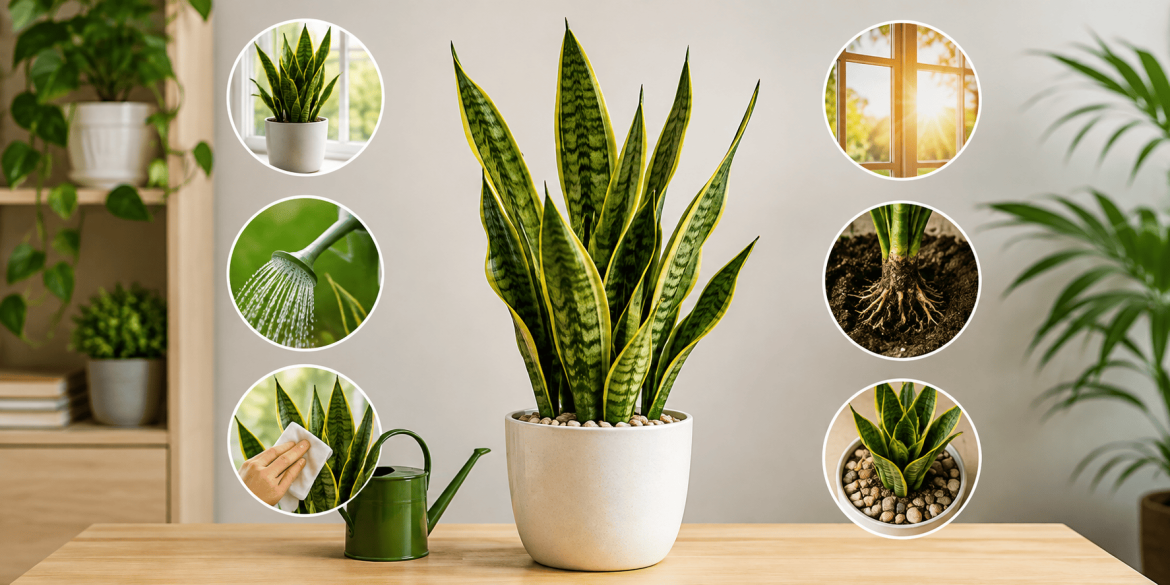
If you want a stylish houseplant that requires little care, the snake plant is a great option. It is easy to grow and very rewarding. With tall, sculptural leaves that have striking patterns, this plant also helps clean the air indoors. It has become a popular choice for homes, offices, cafes, and even bedrooms.
Snake plants are tough and long-living, making them perfect for people who often forget to water their plants. This guide shares essential snake plants care tips. You will learn how to choose the right variety, create the best growing conditions, and keep your Sansevieria healthy with minimal effort. Whether you are a beginner or an experienced plant lover, you will find everything you need to grow and care for a thriving snake plant indoors.
Types of Snake Plants
There is a wholesome snake plant varieties, bifurcated by shapes and colours, so you can pick one that complements your decor. The most common type, Sansevieria Trifasciata (Mother-in-law’s Tongue), has flat, sword-like leaves that are dark green with grey-green stripes. Other popular varieties are Sansevieria Laurentii, Sansevieria Cylindrica, Sansevieria Hahnii, and Sansevieria Masoniana. All the different types of snake plant vary in size, leaf shape, colour and growth habits. While some grow tall and upright, some stay short and spread out.
Growing Snake Plants: What You Must Know
Learning how to grow a snake plant is simple, making it perfect for beginners. They can thrive both indoors and outdoors as long as they are kept in bright, indirect light and well-draining soil. Because of their ability to survive long dry periods and adapt to different environments, snake plants are often called “unkillable plants”. Even if you forget to water them for weeks, they will continue to grow.
Snake Plant Propagation: How to Multiply Your Plant
One of the joys of owning a snake plant is how easy it is to multiply it without buying new ones. Here are three simple methods:
• Leaf Cuttings in Soil: Cut a healthy leaf into 2–3 inch sections. Let the cut ends dry for a day or two to prevent rot. Plant the cuttings upright in a pot with moist, well-draining soil and keep them lightly watered until new roots develop.
• Propagation in Water: Place leaf cuttings in a jar of water, ensuring only the bottom part is submerged. Change the water every few days and wait for roots to grow. Once strong roots appear, transfer the cutting to soil for long-term growth.
• Division of Rhizomes: Snake plants grow from underground stems called rhizomes. Gently remove the plant from its pot, separate the root clumps with a clean knife or hand, and replant each section in a new pot. This method is the fastest way to create new plants.
Tips to Grow Snake Plants Faster & Healthier
While snake plants are naturally slow growers, you can encourage stronger and faster growth with a few extra steps:
• Best Soil Mix: Use a cactus or succulent mix with added sand or perlite for extra drainage. Avoid regular garden soil as it holds too much water.
• Ideal Temperature & Humidity: Keep your plant in a room with temperatures between 16°C and 29°C. They tolerate dry air but appreciate occasional misting in very dry climates.
• Occasional Fertilisation: During the growing season (spring and summer), feed with a diluted balanced fertiliser once a month to encourage leaf development.
Regular dusting of the leaves helps the plant breathe better and keeps it looking fresh.
How to Care for Snake Plant
Knowing how to take care of a snake plant is straightforward. Follow these snake plants care tips to keep it thriving:
• Light: Bright, indirect light is best but they can survive in low light or even fluorescent office lighting. Avoid strong midday sun which can scorch the leaves.
• Water: Allow the soil to dry out completely between waterings. Water sparingly, especially in winter when growth slows. Overwatering is the most common cause of problems.
• Fertiliser: Use a balanced houseplant fertiliser once a month in the warmer months. Skip fertilising in autumn and winter.
• Pruning: Remove yellow, damaged or drooping leaves with clean scissors to keep the plant neat and encourage new growth.
• Pot & Container Care: Choose a pot with drainage holes to avoid water build-up. Terracotta pots are ideal as they allow excess moisture to escape.
Common Problems & Solutions
Even the toughest plants can face issues from time to time. Here are common problems and how to fix them:
• Yellowing Leaves:
Cause – Usually a sign of overwatering or poor drainage.
Remedy – Allow the soil to dry completely before watering again.
• Root Rot: Caused by waterlogged soil.
Prevention & Treatment – Remove the plant from its pot, cut away any rotten roots and replant in fresh, dry soil.
• Brown Tips: Low humidity or irregular watering can lead to brown leaf tips.
How to FIx? Trim the tips carefully and maintain a consistent watering schedule.
• Pests: Mealybugs and spider mites may appear on leaves.
Solution – Wipe them off with a damp cloth or treat with insecticidal soap.
• Slow Growth: Snake plants naturally grow slowly but sometimes they can slow down even more.
Common Reason – Very low light or lack of fertiliser.
Solution – Move the plant to a brighter spot and feed during spring and summer.
Placement Guide
Snake plants fit almost anywhere in your home or office. They look great in living rooms, bedrooms, hallways, bathrooms and work desks. Place one in a corner to freshen the air or beside a sofa to create a natural accent.
For better air purification, keep a plant in rooms where you spend the most time, such as the bedroom or living room. According to Feng Shui and Vaastu, placing a snake plant near entrances is believed to invite positive energy and protection.
Know the Snake Plant Better: Origins of Sansevieria
Snake plants originally belong to dry regions of West Africa, Madagascar and southern Asia, which defines their ability to grow in rocky soil and harsh sunlight naturally. In African traditions, people keep snake plants near the home entrances to safeguard homes from negative energy. In Asia, they are seen as a symbol of good fortune and prosperity. Their ability to stay green and upright in harsh conditions has made them a long-time favourite for those seeking a plant that stands for resilience.
Order Snake Plants Online for Home & Gifting
Snake plants make the best indoor plant for gifting because they are elegant, long-lasting and easy to care for. They suit every occasion from housewarmings to birthdays, and even office celebrations. Their reputation for bringing luck and positive energy makes them an especially thoughtful present.
You can easily order snake plant for gift or buy plants online to surprise your loved ones. Online ordering gives you a wide choice of pots and sizes, doorstep delivery and the chance to send a meaningful gift that symbolises growth and good fortune.
FAQs
Q. How often should I water a Snake Plant?
Water only when the soil is dry. In winter, watering once every three to four weeks is usually enough.
Q. Can a Snake Plant grow in low light?
Yes, it can survive in low light conditions but grows better in bright, indirect light.
Q. What is the best soil mix for Snake Plants?
A fast-draining cactus or succulent mix with perlite or sand is ideal.
Q. Do Snake Plants purify the air?
Yes, they help remove indoor toxins and release oxygen, improving air quality.
Q. How do I prevent Snake Plant root rot?
Use a pot with drainage holes and avoid overwatering to keep roots healthy.
Q. Can I grow Snake Plant in water permanently?
It can live in water for a while but soil planting is better for long-term growth.
Q. Is Snake Plant safe to keep in bedrooms?
Yes, it releases oxygen at night and is perfect for bedrooms.
Q. Are Snake Plants toxic to pets?
Yes, they can be mildly toxic if eaten by cats or dogs, so keep them out of reach of pets.