
Some holiday memories come home as photographs. Others arrive in a carefully packed box, with instructions to save a slice for everyone. In Goa, that box often holds Bebinca.
Bebinca is iconic because it brings together Goa’s Indo-Portuguese food heritage, patient layer-by-layer baking and a lasting place at festive tables. This traditional Goan dessert is widely known as the queen of Goan desserts.
Its golden layers make a beautiful first impression. The story behind them gives you even more reason to reach for a fork.
Table of Contents
What Is Bebinca? A Closer Look at Goa’s Layered Cake
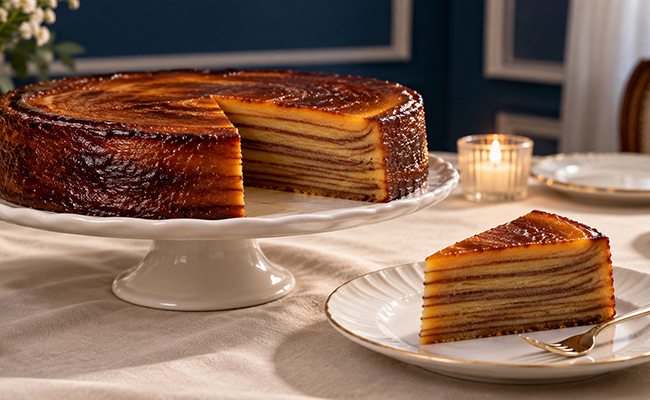
Bebinca is a traditional Goan layered pudding cake made with coconut milk, egg yolks, sugar, plain flour and ghee. Each layer is cooked before the next is added, creating a dense, tender dessert with distinct golden-brown bands.
It is also known as bibik or bebinka.
Unlike a light sponge cake, Goan Bebinca cake has a firm yet softly yielding texture. Cut through it and the layers hold their shape, ready to be served in neat slices.
The main Bebinca ingredients each have a purpose:
- Coconut milk: Gives the batter its mellow coconut flavour.
- Egg yolks: Add richness and help the layers set.
- Sugar: Sweetens the cake and contributes to its browned flavour.
- Plain flour: Provides structure.
- Ghee: Adds buttery depth between the layers.
Some recipes include nutmeg for a little warmth.
The taste is rich, sweet and gently caramelised. Think of coconut custard with browned edges, served in a slice you can lift with a fork. There is no frosting competing for attention. The flavour and texture come straight from the batter and the baking.
The History of Bebinca and Its Goan Roots
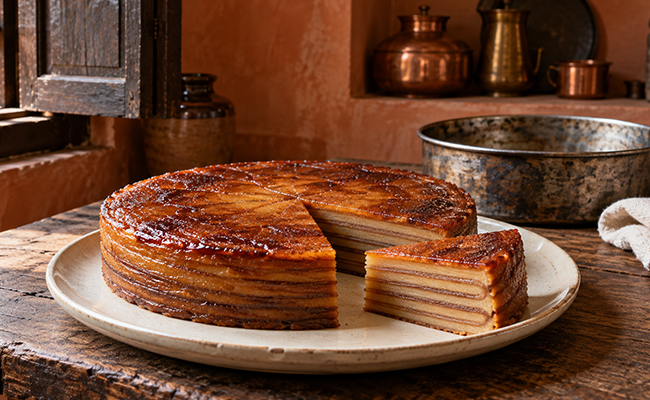
Bebinca’s history is closely tied to Goa’s Indo-Portuguese cuisine. It reflects a meeting of egg-rich sweet-making traditions and ingredients familiar to Goan kitchens, particularly coconut milk.
Its most famous origin story features Sister Bebiana, a nun associated with the Convent of Santa Monica in Old Goa. According to legend, she created a seven-layer dessert that became Bebinca.
It is an appealing story, but its status matters. The Archdiocese of Goa and Daman describes the convent connection as oral tradition, so the account should be presented as a legend rather than a proven invention story.
Beyond that tale, Bebinca belongs to a living food culture. Its place in Goan celebrations connects it to kitchens, family recipes and festive gatherings, giving it a meaning that stretches beyond its ingredients.
That makes its history worth exploring alongside other traditional Indian cakes. The interest lies in how a dessert becomes part of local life: familiar enough to bring comfort, distinctive enough to represent a place.
Bebinca does both, one carefully baked layer at a time.
What Makes Bebinca the Queen of Goan Desserts?
Bebinca is called the queen of Goan desserts for its distinctive layers, rich flavour, skilled preparation and cultural importance. Its place at Christmas celebrations, weddings and family gatherings adds to its reputation as a special-occasion sweet.
The nickname feels easier to understand once you learn how it is made.
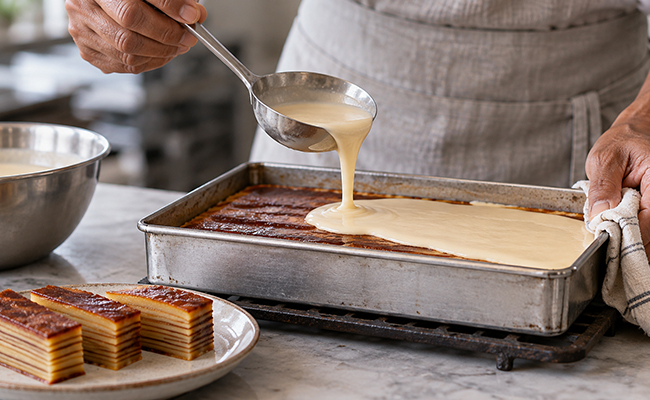
A baker pours a thin layer of batter into the tin and cooks it before adding the next. That sequence continues until the dessert has its signature stack. Each stage needs judgement: the layer must set properly and develop colour without becoming overcooked.
Bebinca commonly has between seven and sixteen layers, although recipes vary. The number alone does not determine its quality. Even layers, a tender texture and balanced browning matter just as much.
Its striped cross-section gives the cake a recognisable appearance without elaborate decoration. A plain slice is enough to show the work involved.
Then there is its place at the table. Goan Christmas sweets are part of the season’s pleasure, and Bebinca brings a generous finish to a celebratory meal. It is the kind of dessert that invites small slices, long conversations and the occasional second helping.
For visitors, it offers a taste to remember after the holiday ends. For people who grew up eating it, the connection can be much closer to home.
Goa Tourism itself describes Bebinca as the queen of desserts. Its crown rests on a combination of craft, flavour and familiarity that has kept it memorable across generations.
How to Enjoy Traditional Goan Bebinca
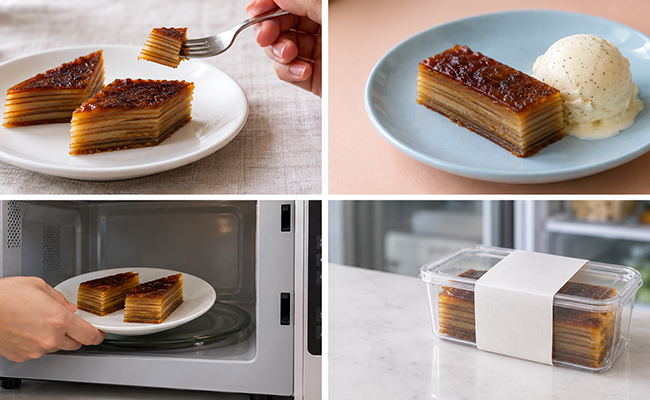
There are many traditional ways you can savour and enjoy this delicacy:
- Serve Bebinca in small slices, warm, cold or at room temperature.
- It can be enjoyed plain or paired with vanilla ice cream, a popular accompaniment that contrasts with the cake’s rich texture.
- For your first taste, try a bite on its own. Notice the coconut flavour, the softly set layers and the browned edges before adding anything else.
- Gentle warming makes its aroma especially inviting. A cooler slice offers a firmer bite, so the choice comes down to the texture you enjoy.
- If you buy packaged Bebinca, follow the maker’s storage instructions. Recipes and packaging differ, so a single shelf-life rule will not suit every version.
Keep the serving simple. The layers already provide plenty to admire.
A Goan Classic
Bebinca is renowned as one of the best cakes in goa because of the care that goes into making it and the place it holds in Goan life. Its ingredients are familiar, yet its method creates something instantly recognisable.
Next time you see a slice, look closely at those golden bands. Every one needed time and attention. Then take a bite and enjoy the result.
